
AI Skin Analysis: Understand Your Skin From a Single Photo
Point a phone camera at your face, and an AI skin analysis tool can flag acne, wrinkles, pores, pigmentation and redness before you’ve finished reading this sentence. It works by running a selfie through computer-vision and deep-learning models trained on thousands of dermatologist-graded photos, then turning the findings into a personalized skincare plan in under a minute.
That speed is genuinely useful, but it comes with a boundary worth stating upfront: this is a cosmetic, educational analysis, not a medical diagnosis, and it does not replace a dermatologist. Our AI assistant walks you through the same kind of skin analysis conversationally — ask it about a concern and it explains what it’s seeing, in plain language, with the same limits in mind.
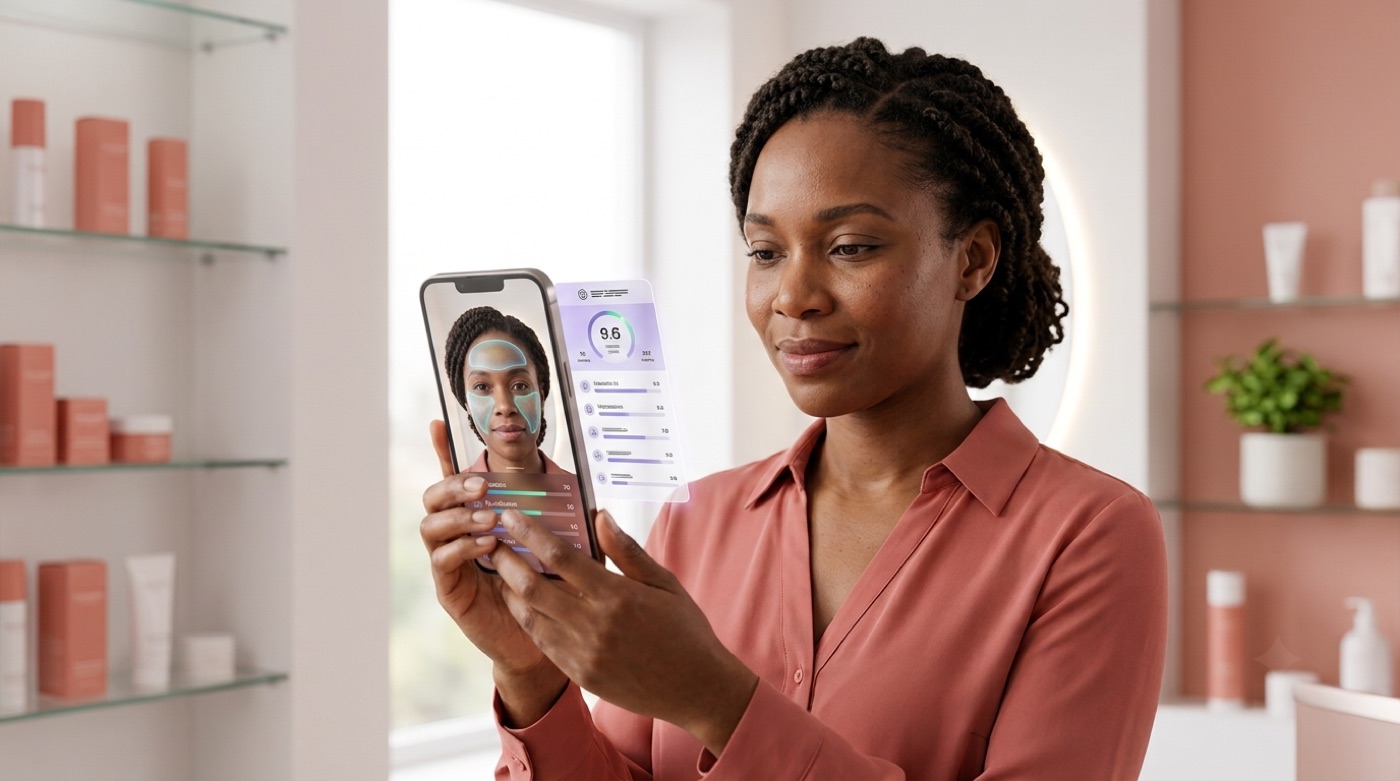
What Is AI Skin Analysis?
AI skin analysis is a technology that examines a face photo and describes the condition of the skin — which areas show acne, where pigmentation is uneven, how pronounced pores or fine lines are, and how hydrated or oily the skin looks. It grew out of two overlapping industries at once: skincare brands wanting a personalized-recommendation engine, and health-tech startups building screening tools on the same underlying computer vision.
Coverage varies a lot by provider. Some dedicated skin-scanning services check 58 or more individual skin features from a single photo, while lighter, brand-run tools typically report on 6 to 10 core concerns. Both approaches rely on the same building blocks: a face is detected and mapped, a neural network compares the texture and tone against its training data, and the output is translated into consumer-friendly language — an AI-powered skin analysis rather than a raw data dump.
The appeal is accessibility. An AI skin scanner works instantly, doesn’t require booking an appointment, and gives people a starting point for understanding their skin before they decide whether a visit to a professional is warranted.
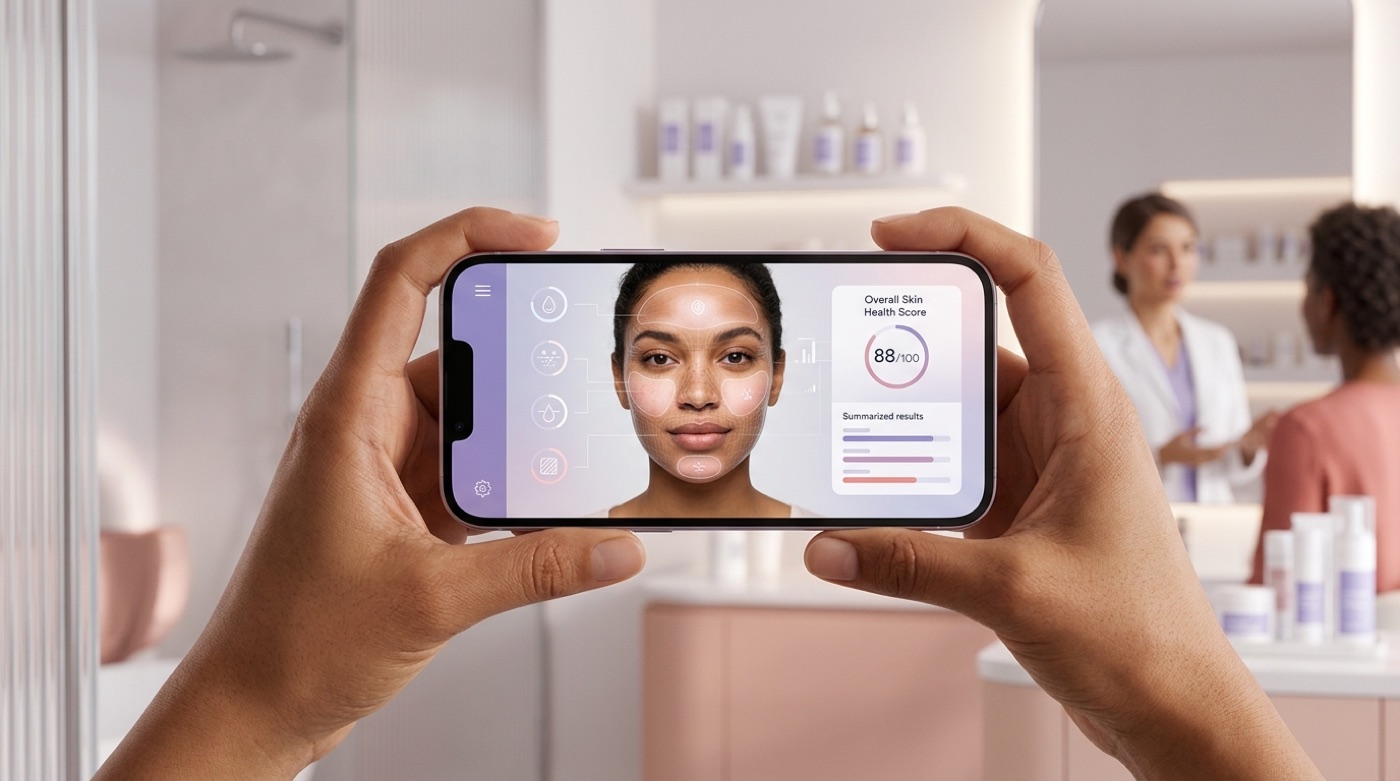
How AI Skin Analysis Works: From Photo to Routine
Every AI facial skin analysis follows roughly the same pipeline, even though the interface differs from tool to tool. A short quiz about skin goals often comes first, followed by the photo capture itself, then the automated analysis, and finally a report paired with product or routine suggestions. The whole cycle typically takes between 30 seconds and three minutes.
Step 1 — Capture a clear selfie
The system needs a front-facing photo taken in even, natural light. Photos get rejected or scored poorly for predictable reasons: poor lighting, a tilted head, more than one face in frame, or low resolution. Several tools ask for up to three photos and recommend holding the camera 15–30 centimeters from the face so the shot stays in focus while still capturing fine detail.
Step 2 — The AI reads your skin
Facial landmark detection maps out zones of the face — forehead, cheeks, nose, chin, under-eye area — so the analysis is spatially consistent from one scan to the next. A neural network then compares texture, tone and visible features in each zone against a database of photos that dermatologists have already labeled, which is how the system learns to recognize the difference between, say, dehydration lines and fine wrinkles.
Step 3 — You get a report and a routine
The output is a written or visual report broken down by skin concerns and scores, followed by a personalized skincare routine. Recommendations usually point toward ingredient classes rather than single products, matched to whichever concerns scored lowest in the report.
| Ingredient class | Concern it typically targets |
|---|---|
| Retinoids | Fine lines, texture, visible ageing |
| Niacinamide | Pores, oiliness, uneven tone |
| Salicylic acid | Acne, breakouts, congestion |
| Antioxidants (vitamin C, etc.) | Environmental damage, radiance |
| Peptides | Firmness, elasticity |
| Hyaluronic acid / humectants | Hydration, tightness |
Because the routine is generated from the same scan, it updates automatically the next time a person re-analyzes their skin — which is also how progress tracking works: two scans a few weeks apart, compared side by side.
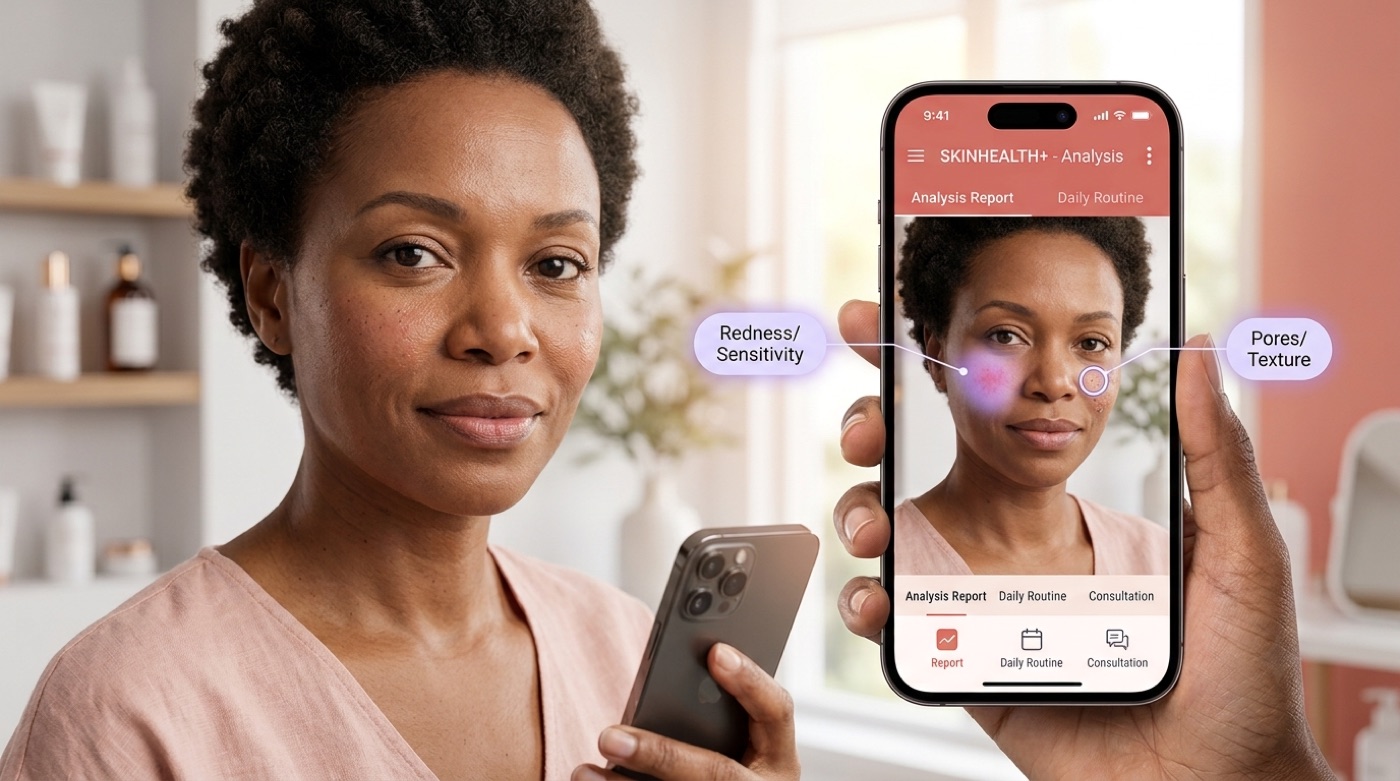
What Does an AI Skin Analysis Measure?
Most AI skin diagnosis tools score the same handful of visible concerns, even if the exact wording differs between brands. The table below groups the common metrics with what a low score in each typically signals.
| Concern | What a low score usually means |
|---|---|
| Acne / breakouts | Active blemishes, clogged pores, inflammation |
| Pigmentation | Uneven tone, dark spots, sun damage |
| Pores | Visibly enlarged or congested pores |
| Texture | Roughness, unevenness across the surface |
| Wrinkles / fine lines | Visible creasing, loss of elasticity |
| Redness / sensitivity | Irritation, visible capillaries, reactivity |
| Hydration | Dryness, flaking, tightness |
| Radiance | Dull, tired-looking complexion |
| Dark circles | Under-eye discoloration or puffiness |
Many tools translate each metric onto a 0–100 skin score so results are easy to compare over time. A typical scale reads as follows: 0–39 signals an area that needs attention, 40–69 is average, 70–84 is good, and 85–100 is excellent. Reading the score this way turns an abstract number into a clear next action — chase down the concerns sitting in the bottom two bands first.
How Accurate Is AI Skin Analysis?
Vendors report high numbers. Skincare brands running their own AI skin analysis frequently cite accuracy in the 95–98% range, built on training databases of tens of thousands of dermatologist-graded photos. Independent skin-scanning services report that a majority of users — often well over 80% — find the results useful enough to act on.
Peer-reviewed research supports the underlying method, with caveats. A widely cited study archived in the National Institutes of Health’s PubMed Central database found that a deep convolutional neural network classified skin lesions with performance on par with board-certified dermatologists across multiple diagnostic tasks, tested against biopsy-proven, curated clinical images. That’s the technical foundation every consumer AI skin analysis tool builds on.
The gap is real-world photo quality. Curated datasets are shot under controlled lighting with calibrated cameras; a bathroom-mirror selfie is not. Inconsistent lighting, camera quality, angle and skin tone representation in the training data can all pull a result away from what a dermatologist would conclude in person. That’s the honest way to read a 95%+ claim — it’s a vendor’s benchmark, not a guarantee for every individual photo.
Any change in size, shape, color or elevation of a spot on your skin, or any new symptom in it, such as bleeding, itching or crusting, may be a warning sign of melanoma.
The Skin Cancer Foundation
Treat AI skin analysis results as a screening layer and a way to track change over time — a useful ranking of what to prioritize, not a clinical verdict.
Is AI Skin Analysis Safe and Private?
Safety here splits into two separate questions: what happens to your photo, and what kind of claim the analysis is actually making.
On the photo side, policies differ by provider. Some brands state that a selfie is deleted within seconds of the analysis completing; others retain images to improve their models unless a user opts out. Before scanning, it’s worth checking a tool’s privacy policy for two things specifically: whether the photo is stored, and whether it’s shared with third parties. If a policy is vague or absent, that’s a reason to be cautious.
On the claim side, the responsible framing is consistent across the category: this is cosmetic analysis, not a medical diagnosis. An AI skin analysis tool is built to describe visible, surface-level skin characteristics for skincare purposes — it is not evaluated or cleared as a diagnostic medical device, and it should not be treated as one.
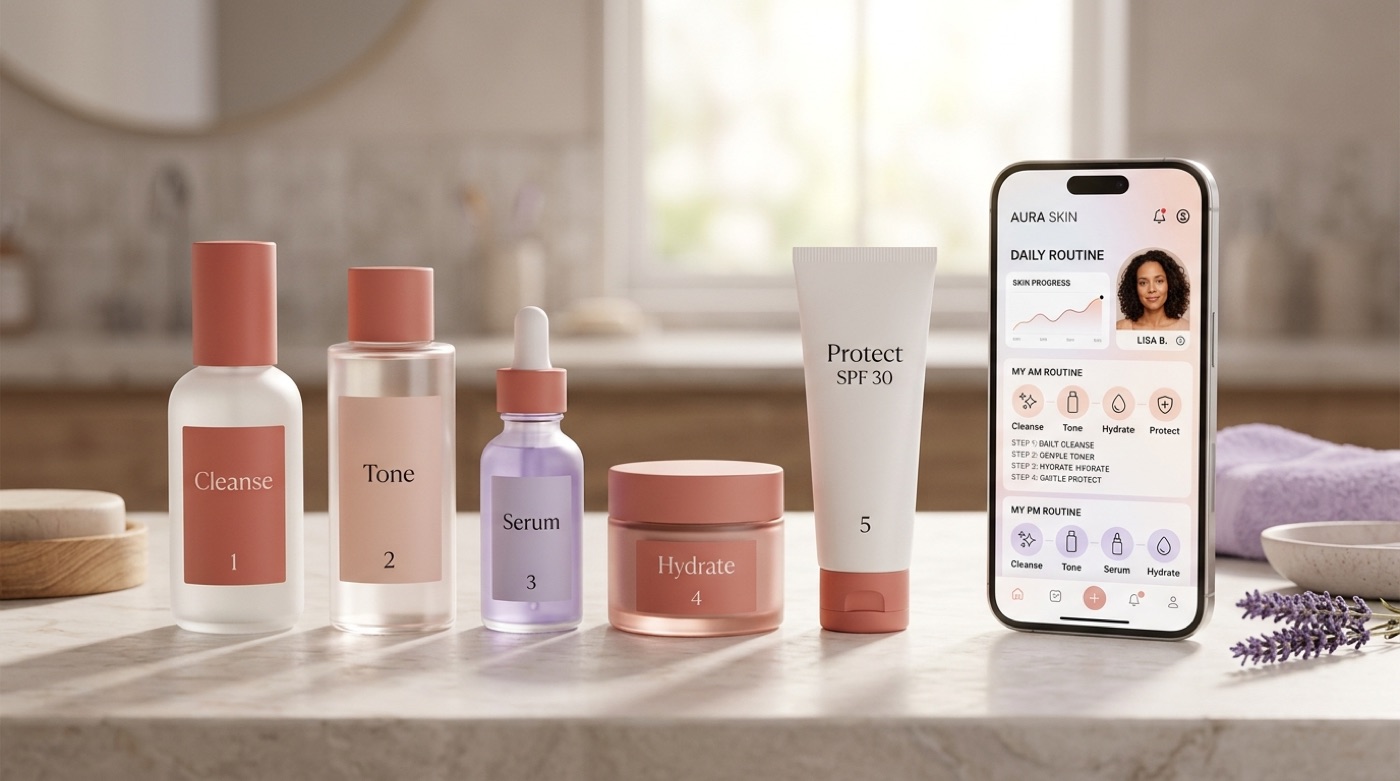
Is There a Free AI Skin Analysis?
Yes. Free instant skin analysis is common because it doubles as a lead-generation tool for skincare brands — you get a report, they get a reason to recommend their product line. Several standalone scanning services also offer a free tier with no app download or credit card required.
If you’d rather skip filling out a quiz and uploading a photo to a brand’s server, our AI assistant offers a conversational alternative: describe your skin concern or share a photo in chat, and it walks through the same kind of AI skin analysis interactively, answering follow-up questions as you go.
AI Skin Analysis vs a Dermatologist: When to See a Doctor
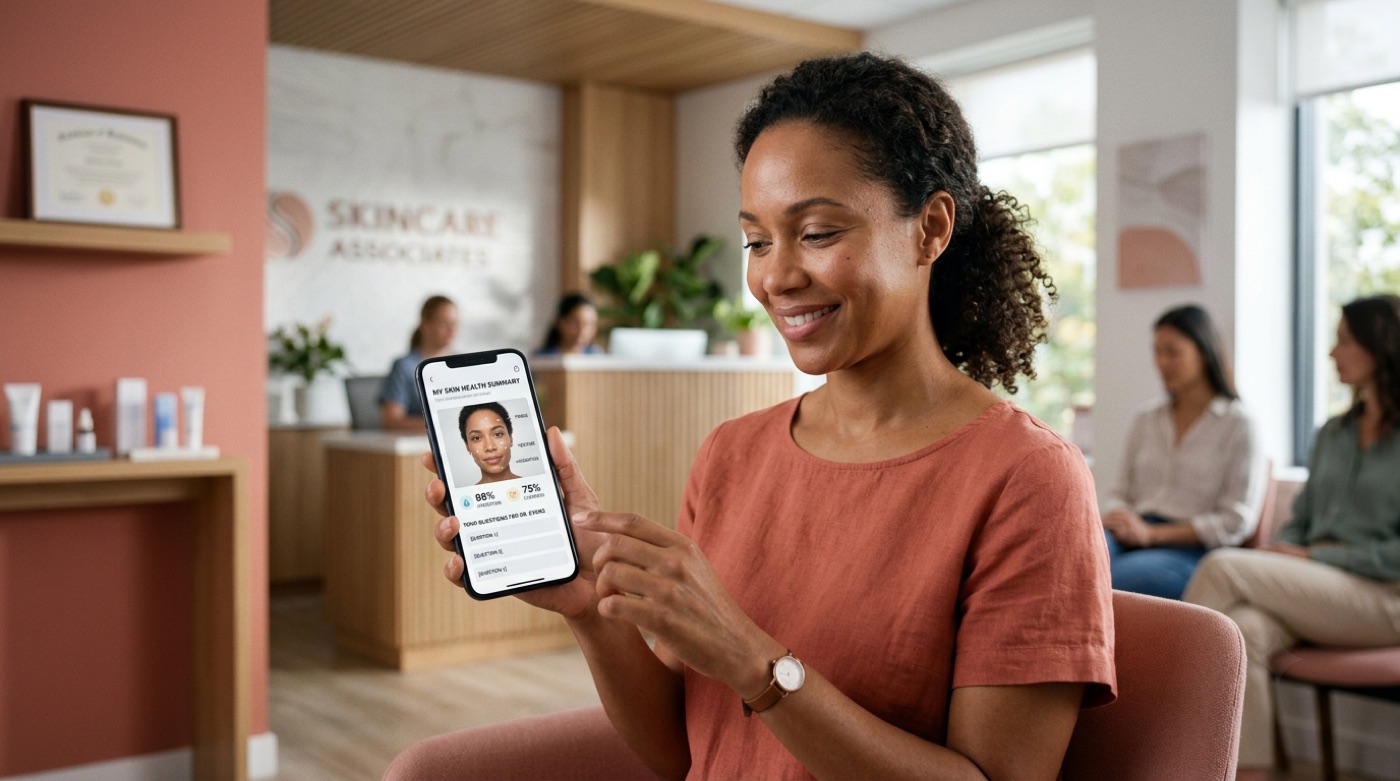
An AI skin scanner is genuinely helpful for three things: understanding what’s visible in your skin right now, tracking how it changes over weeks or months, and arriving at a dermatologist appointment with specific questions instead of vague concerns. It does not diagnose conditions, does not prescribe treatment, and does not replace a clinical exam. In short:
- What it can do: flag visible surface concerns, score them consistently over time, and suggest ingredient classes worth researching
- What it cannot do: diagnose a skin disease, rule out skin cancer, or prescribe or perform treatment
- What only a dermatologist can do: examine skin in person, order a biopsy, and give a medical diagnosis
This distinction matters most with moles and pigmented spots, because the stakes of missing a real problem are high. Dermatologists use the ABCDE rule to evaluate whether a mole needs professional attention:
- Asymmetry — one half of the mole doesn’t match the other
- Border — edges are uneven, notched or blurred rather than smooth
- Color — multiple shades of brown, black or tan within one spot
- Diameter — larger than about 6mm, roughly the size of a pencil eraser
- Evolving — any change in size, shape, color or elevation over time
Beyond ABCDE, several signs call for a dermatologist visit without delay:
- A mole or spot that is new, changing, itching or bleeding
- A sore or lesion that hasn’t healed within a few weeks
- Rapid growth of any skin lesion
- Severe or suddenly worsening acne, especially with pain or signs of infection
- Any spot you’re genuinely worried about, even without a textbook red flag
According to the American Academy of Dermatology, roughly one in five Americans will develop skin cancer in their lifetime, which is why the organization recommends regular self-exams alongside professional checks — an AI scan is not a substitute for either. If a skin symptom appears alongside signs of a severe allergic reaction, rapid swelling, or another acute medical emergency, call 911 or go to the nearest emergency room immediately; that is not a situation for any app, AI or otherwise.
How to Get the Most Accurate Results (Photo Tips)
A scan is only as good as the photo behind it. Follow this sequence before you analyze your skin with AI:
- Find diffused, natural daylight — avoid direct sun, yellow indoor bulbs and backlighting.
- Remove makeup, filters and heavy skincare products so the camera reads actual skin texture.
- Face the camera directly, keeping your head level rather than tilted.
- Hold the phone roughly 10–30 centimeters from your face and let the camera focus before capturing.
- Take two or three shots from slightly different angles if the tool allows it.
- Make sure only one face is in frame, with no obstructions like hair, glasses or hands.
- Review the photo for blur or low resolution before submitting it.
Frequently Asked Questions
- How accurate is AI skin analysis?
Vendors commonly claim 95–98% accuracy, and peer-reviewed research shows deep-learning models can match dermatologist-level performance on curated image sets. Real-world accuracy depends heavily on photo lighting and camera quality, so treat the result as a strong estimate rather than a diagnosis.
- Is AI skin analysis safe?
Yes, when the provider deletes or protects your photo and clearly states the analysis is cosmetic, not medical. Check the privacy policy before uploading a selfie.
- Can AI detect skin problems?
It can flag visible concerns like acne, pigmentation, enlarged pores, redness and fine lines, plus signs worth watching such as changing moles. It cannot diagnose a condition — anything concerning should go to a dermatologist.
- What does an AI skin analysis measure?
Typical metrics include pores, texture, redness, hydration, pigmentation, oiliness, fine lines, firmness, radiance and dark circles, often scored on a 0–100 scale.
- Is there a free AI skin analysis?
Yes. Many brand tools and standalone scanners are free, and our AI assistant offers a free conversational skin analysis with no app download required.
- Can AI replace a dermatologist?
No. AI skin analysis helps you understand your skin and prepare for an appointment, but only a board-certified dermatologist can examine, diagnose and treat a skin condition.